
Live Oak County Warrant Elements Under Article 15.02
Article 15.01 of the Texas Code of Criminal Procedure defines an arrest warrant: a written order from a magistrate directing a peace officer, or a person the magistrate names, to take an accused into custody. That is state law. Article 15.02 lists what the document must show. It needs the accused's name or a description definite enough to identify the person, the offense charged, and the magistrate's signature and office. Article 15.03 governs issuance after a sworn complaint or another statutory basis. A Live Oak County warrant meets the same requirements as any warrant in Texas. Sometimes the magistrate issues a summons instead. Ignore a summons, and a warrant can follow the failure to appear. The Chapter 15 text spells out every definition and issuance rule.
Live Oak County Arrest Warrants Explained
An arrest warrant lets an officer take a person into custody, while a search warrant only allows a search or seizure of property or evidence. The two are easy to confuse. A new arrest warrant usually follows a sworn complaint or a statutory process. A bench warrant works differently. It is tied to a missed court duty, such as a failure to appear. The court on the case decides which process applies. Live Oak County offers no sheriff page for comparing the types side by side. For felony and district-level matters, the District Clerk's public page lists the 36th, 156th, and 343rd Judicial District Courts along with the 2nd Multicounty Court at Law. Lower courts keep their own records.
Live Oak County Arrest Warrant Fields
Live Oak County publishes no sample arrest warrant for the public to review. The table that follows lists statutory and expected details only. It is not a portal's field list. For an active Live Oak County case, ask the clerk to confirm the actual cause number, status, and bond information rather than relying on it.
| Warrant number | Local format not published; do not infer a code. |
|---|---|
| Named person | Name or a reasonably definite description under Article 15.02. |
| Offense | The offense identified in the written order. |
| Issuing magistrate | The authorized magistrate's signature and office. |
| Cause, date, or return | Case and execution details may be held by the issuing clerk. |
| Bond and status | Live Oak amount, bond type, and status labels were not published. |
| Serving agency | May be shown in a clerk or agency record; ask the issuer. |
Live Oak County District Warrant Files
The Live Oak County District Clerk's Room 202 page says the office maintains district-level felony criminal, civil, and family records and legal documents that include warrants. It serves three district courts and lists the 2nd Multicounty Court at Law. For county-level records, the County Clerk is a separate contact in Room 105. A JP or city citation does not move to the District Clerk merely because the Sheriff may serve it.
The Texas Judicial Branch trial-court page explains how courts fit into the state structure; the image shows that general context, not a local docket.

For a Live Oak County district file, call the clerk serving the issuing court. That office is your contact. The District Clerk gives no legal advice and accepts no email, fax, or mailed case filings. A recall motion goes to the court, not the records desk.
Serving Arrest Warrants in Live Oak County
Several officers can execute a warrant in Live Oak County. The Sheriff, a constable, city police, a municipal marshal, or another authorized peace officer may serve process within the authority the law gives each one. The county's public pages do not say which officer serves each court's warrants. The four constables share the Sheriff's published phone. None lists a separate warrant hotline. Call the agency for routing, then check with the issuing court on its record and instructions. Article 15.06 gives some county and district clerk and magistrate arrest warrants statewide reach, within statutory limits. After an arrest, the clock starts. Article 15.17 requires presentation before a magistrate no later than 48 hours for warnings and bail consideration when allowed. The Sheriff's page lists no booking or surrender steps.
Live Oak County Sheriff Serves Warrants
The Sheriff executes warrants; the issuing court decides whether to recall one. That split matters in Live Oak County. The office page gives 361-449-2271. It posts no online roster, warrant division hours, bond window, or surrender instructions. Ask which court issued it. For a current status and a way to resolve the underlying case, contact that court too.
Live Oak County Sheriff's Office
200 Larry R. Busby Drive
George West, Texas 78022
361-449-2271
The county's constable directory identifies service agencies but not their court-by-court assignments in Live Oak County. One agency's silence does not close the question.
Comparing Arrest, Summons, and Bench Warrants
In Live Oak County, a summons and a warrant are different orders. One tells a person to appear in court. The other sends an officer to make an arrest. A bench warrant is different still. It follows a missed setting or another court duty, and a summons can turn into a warrant when the person fails to appear as directed.
| Process | Basis | What it directs | Live Oak contact |
|---|---|---|---|
| Arrest warrant | Probable cause or statutory basis | Officer takes the accused into custody | Issuing clerk and Sheriff for service |
| Summons | Authorized alternative to arrest | Person appears as ordered | Court named on the summons |
| Bench or FTA warrant | Missed court obligation | Process returns the person to court | JP, municipal, or district court |
| Search warrant | Probable cause to search | Officer searches for property or evidence | Issuing magistrate or clerk |
Live Oak County Federal Warrant Route
A federal case never lands in a Live Oak County docket. The Live Oak County Sheriff has no page that checks federal warrants, so a county warrant search will not surface one. The county sits in the Southern District of Texas, Corpus Christi Division. That division's courthouse sits at 1133 North Shoreline Boulevard. The U.S. Marshals page lists a local office too. For dockets, PACER is the standard search tool, and CourtListener's RECAP archive carries some public documents for free. Neither one confirms an active warrant. A sealed warrant can stay out of any public docket entirely. For anything outside the county system, use counsel or the issuing federal court. The U.S. District Court's Corpus Christi Division page lays out that federal route rather than a local warrant roster.
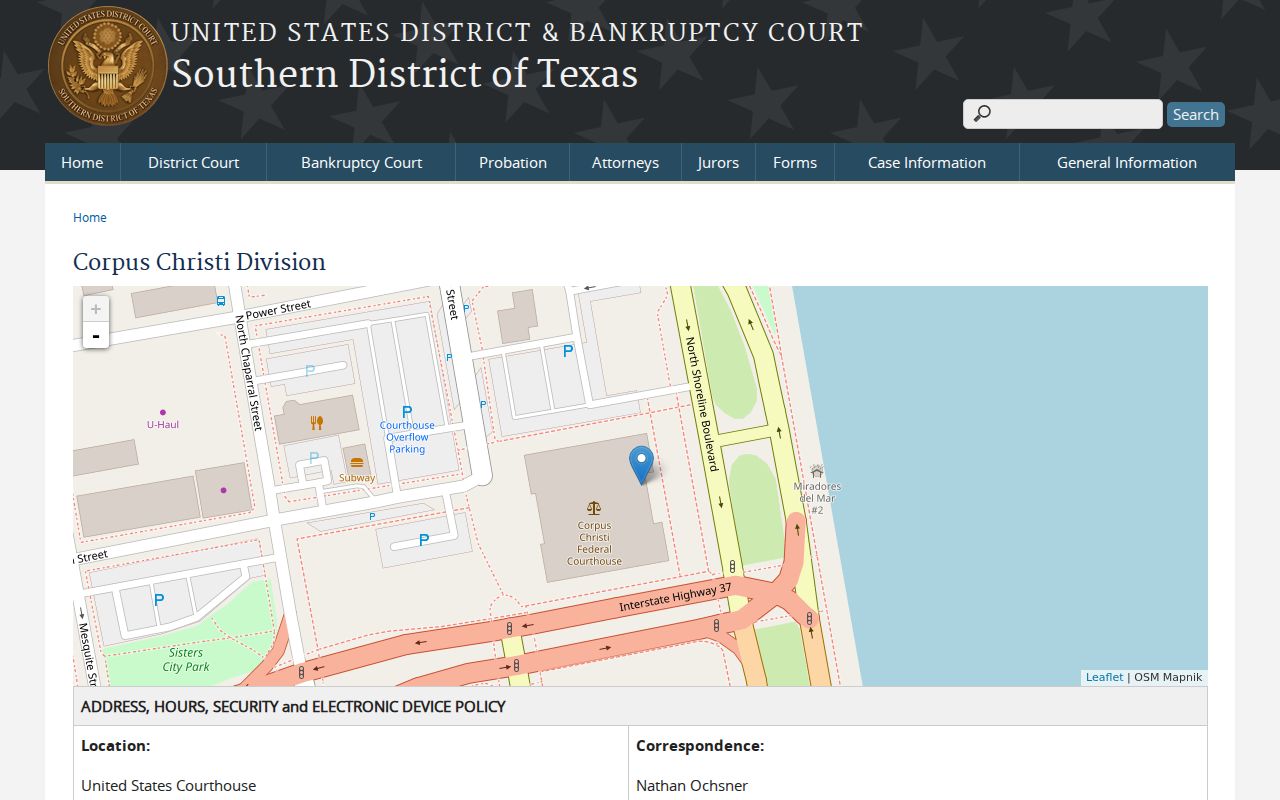
For a federal warrant question touching Live Oak County, use the official PACER system for dockets; the CourtListener RECAP archive offers some of that docket material for free.
If There's an Arrest Warrant for You
Call first and confirm the issuing court, the warrant's current status, and what steps it wants from you. The Live Oak County Sheriff's page promises no safe-surrender window, no walk-through, and no set bond amount. A licensed Texas attorney can press the court for a voluntary appearance, a recall, a bond, and what each step means for the case. Only the issuing court controls that process, not a payment site or a service agency.
Important: Ask counsel and the issuing court how to appear, whether bond applies, and what will happen to the underlying case.
Bring the case number. Get written confirmation of any appearance, payment, bond, or recall, and keep it. The main Live Oak County warrant overview lists the clerk and lower-court routes, though the court itself remains the source for instructions.
Article 15.26 and Public Warrant Records
Code of Criminal Procedure Article 15.26 gives executed arrest warrants and their supporting affidavits a specific public-access route: copies flow through the magistrate's clerk. That access has limits. Live Oak County offices may still withhold or redact a sealed matter, a juvenile record, an active investigative file, or protected personal information under other law. If a copy is denied, ask the office to name the record it holds and state the legal basis. A written Texas Public Information Act request is the tool for asking an office for existing records; send it to the court or law enforcement office likely to hold the file, describing exactly what you seek. The Texas Judicial Branch's open-records policy, Government Code Chapter 552, and Family Code Chapter 58 each explain different access rules.